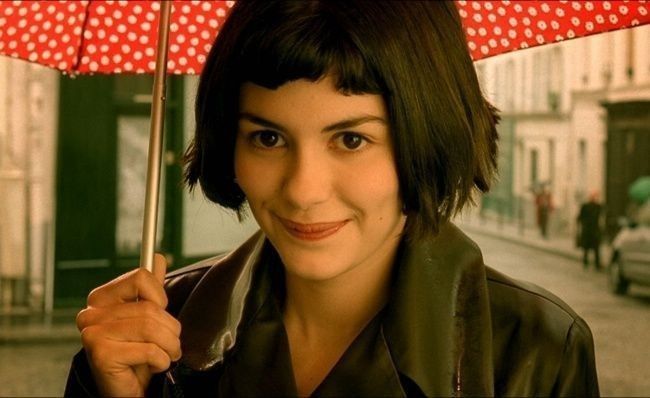
There are certain moments in life when art seems to reach into the very depths of your soul and reveal parts of you that you never knew could be expressed. That’s exactly how I felt when I first watched Amélie. It wasn’t just a film—it felt like someone had stepped into my mind, observed my thoughts, and created a character who mirrored my inner world. Every detail, from the colors to the framing to the symbolism, spoke directly to the heart of the 4w5: the delicate, poignant beauty of life’s complexities. The cinematography captured an existence that seeks meaning in the smallest moments, embraces solitude as a means of self-discovery, and longs for authentic, meaningful connections. There’s a rare magic in seeing yourself not as you present to the world, but as you are in the quiet, hidden spaces of your mind. And when I watched Amélie for the first time, I felt that magic.
When I began watching Amélie, I immediately felt a sense of recognition, as if someone had finally found a way to articulate the way I see the world. The film’s quirky, visual style—bursting with color, movement, and atmosphere—resonates deeply with me. But what truly gripped me was the character’s inner world: her quiet, reflective nature, her emotional depth, and the way she finds beauty in the most unexpected places. It was a revelation, really. I wasn’t just watching a character on screen. It was as if someone had accessed the chambers of my mind and said, “This is you.”
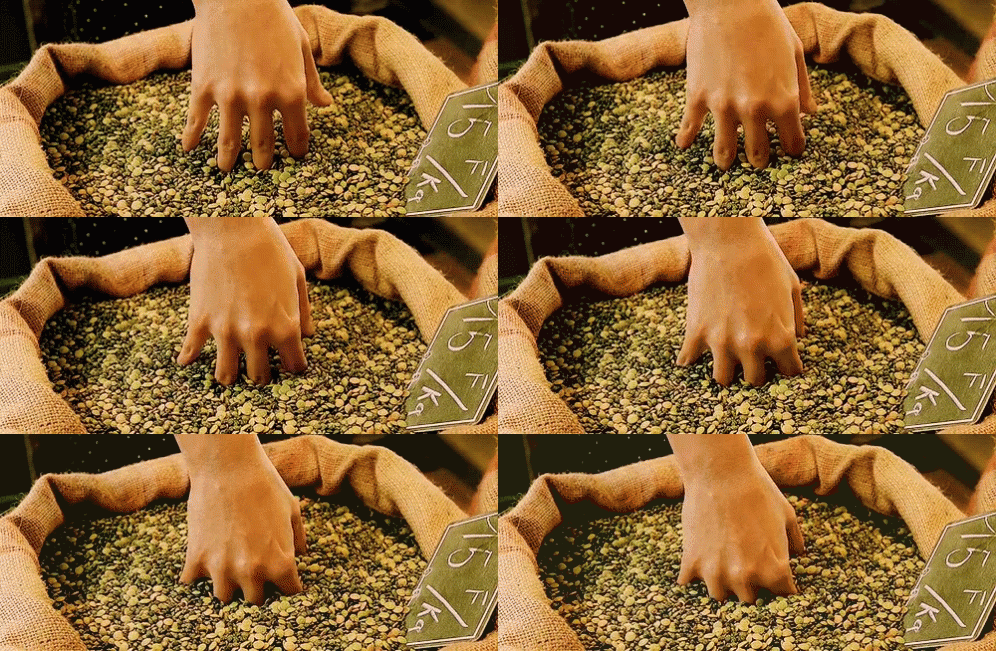
Amélie lives in a world that is full of life but is often in the background, observing rather than participating directly. She takes solace in the smallest, most delicate aspects of life, like the way a feather floats gently in the air or the soft sound of stones under her fingertips. These moments speak to something deep within me. I too have spent so much of my life observing, listening, and feeling the richness of the world around me—so often finding beauty in what others might overlook. In the chaos of a bustling city, Amélie sees the quiet hum of life—the delicate pulse of the world that hums beneath the surface.
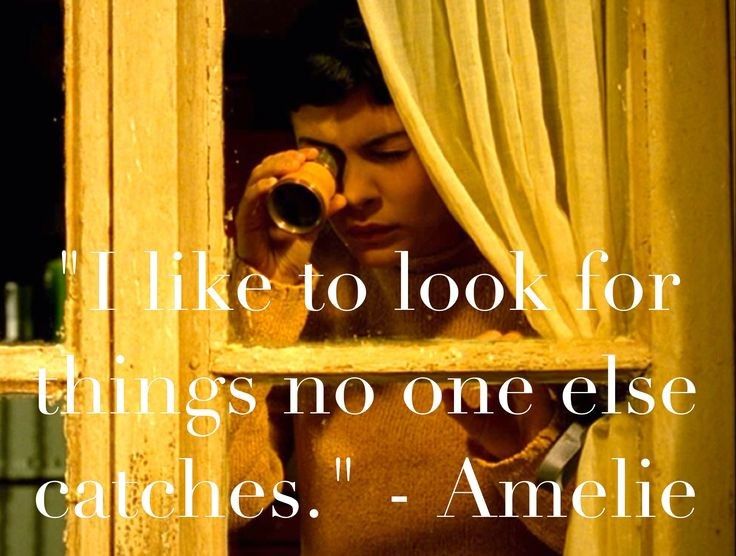
For an Enneagram 4, the sense of feeling like an outsider, like someone who is inherently different, can be both a source of pain and beauty. We are the dreamers, the artists, the individuals who often feel like we don’t fit neatly into the confines of society’s expectations. But for Amélie, as for me, there’s a particular kind of magic in being apart from the crowd. We are attuned to what others might miss: the flicker of light on a rainy afternoon, the joy in a fleeting moment, the hidden emotions that others don’t see. And that, for me, is where Amélie’s world feels like a true reflection of my own.
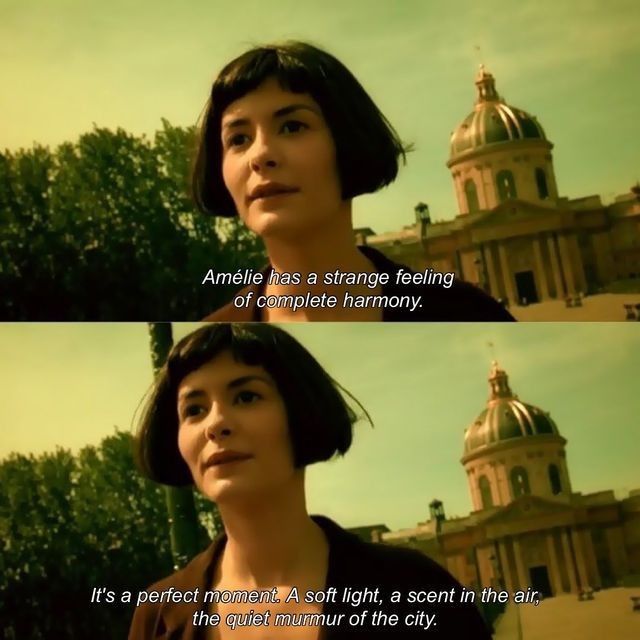
The more I watched Amélie’s journey unfold, the more I saw her as an unmistakable Enneagram Type 4. Type 4s are deeply introspective, highly emotional, and often experience a sense of longing for something more, something that they feel is just beyond their grasp. This longing stems from a deep-seated belief that they are unique, often to the point of feeling misunderstood or disconnected from the world around them.
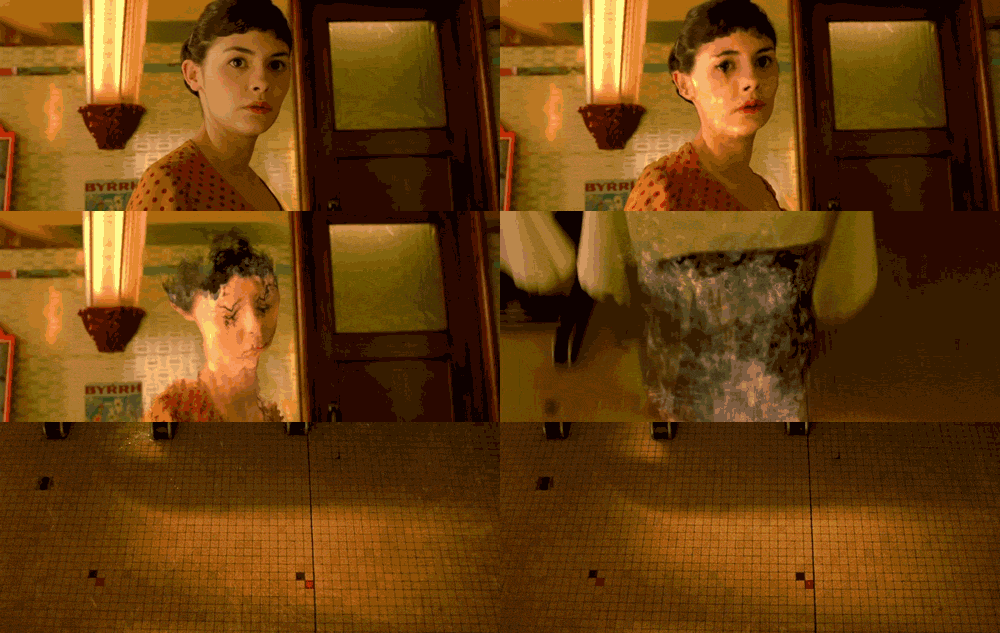
Amélie embodies this so perfectly. Her sensitivity to the world around her, combined with her deep inner life, marks her as a true Type 4. Her moments of joy are often quiet, private ones: a soft smile, a small act of kindness, a brief touch of a flower petal. She lives with a kind of tender melancholy, constantly seeking out beauty and meaning in a world that can seem indifferent. As I watched Amélie, I realized how deeply I resonated with this pursuit. I, too, often search for meaning in the little things—finding a moment of truth or connection in the fleeting and impermanent.
![Jeunet, J.-P. (Director). (2001). Amélie [Film still]. Amélie Productions](https://dreamerpen.com/wp-content/uploads/2025/01/10000385124536641272880073163.jpg)
Amélie also shows the inherent contradiction of the Type 4: the desire for connection with others, yet a fear that if others truly saw them for who they were, they would be rejected. In Amélie’s case, this fear manifests in her gentle, yet deliberate, distance from others. She orchestrates small, thoughtful interventions in the lives of those around her, finding a kind of quiet fulfillment in knowing that she has made a difference, without ever revealing herself in the process. It’s a coping mechanism that resonates deeply with me. The fear of vulnerability, of exposing the depths of one’s true self, is something that I often struggle with. Yet, like Amélie, I find joy and purpose in small, anonymous acts that reveal a deep empathy and understanding of the world.
What I find most fascinating about Amélie is how her quirks, her oddities, and her individuality are celebrated in the film. She is not just “eccentric” or “different” for the sake of being so. These traits are not meant to be seen as flaws but as parts of her unique way of seeing the world. Amélie’s sense of wonder, her love for small details, and her quiet introspection are what make her special—not just to the viewer, but to herself. This is perhaps one of the greatest lessons that Amélie has to offer: that being different is not something to hide, but something to embrace fully.
Like Amélie, I have spent much of my life navigating the tension between wanting to be understood and retreating inward because of the fear that others won’t accept the parts of me that I find most difficult to explain. There’s a constant internal dialogue, a yearning for connection, but also a deep protection of my own vulnerability. I see this in Amélie as well. She wishes to connect, to share her love, to step out of her shell—but she does so on her terms, in her own way. She uses small acts of kindness to express her inner world, just as I use my art, my writing, and my photography to do the same.

Another part of Amélie’s character that I deeply connect with is her creative spirit. Throughout the film, she uses her creativity to not only express herself but to weave meaning into the lives of others. She takes something ordinary and transforms it into something profound—whether it’s reuniting two long-lost lovers or simply showing someone the joy of a small, overlooked moment. For Amélie, creativity is a way to make sense of the world, a means of finding beauty in a world that can often feel shallow or meaningless.
As an Enneagram 4, creativity is something that runs through me, too. Whether it’s through photography, writing, or even just the way I look at the world, I create meaning from the moments that others might pass by without noticing. Like Amélie, I find profound satisfaction in transforming the ordinary into something extraordinary, in capturing fleeting moments that feel like truths, in expressing the complexity of emotions that so often feel hard to articulate.
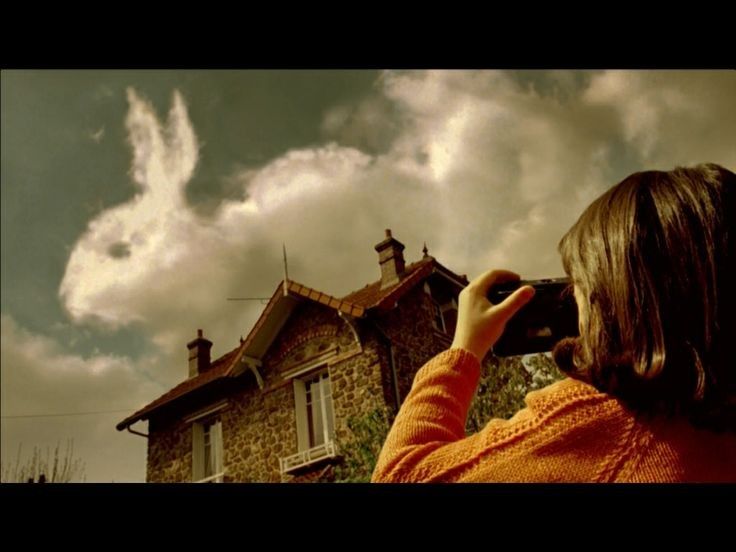
In the film, Amélie’s journey is one of opening herself up, of breaking through the walls she’s built around her heart. The moment when she allows herself to love and be loved is a beautiful turning point in her journey—an affirmation that being true to oneself, no matter how imperfect, is the only way to experience true connection.
For Type 4s, this is often a lifelong struggle: the desire to be authentic and true to our inner selves, yet the fear that if we reveal who we truly are, we will be rejected or misunderstood. Like Amélie, I’ve spent much of my life moving through the world carefully, not exposing too much of my true self, creating little moments of connection, but always holding something back. The beauty of Amélie’s journey is that she shows us that when we finally shed that fear and embrace the full scope of our uniqueness, we can find love and acceptance—not only from others but from ourselves.
In the end, Amélie is not just a film. It is a profound and intimate exploration of what it means to be an Enneagram 4—the longing, the beauty, the quiet melancholy, and the desperate search for authenticity in a world that doesn’t always understand us. Amélie feels like a reflection of my own soul, a reminder that even in my quietest, most reflective moments, there is beauty in embracing my uniqueness, my emotions, and my creativity.
Amélie taught me that it’s okay to be different, that it’s okay to feel deeply, and that it’s okay to navigate the world with both fragility and strength. She reminds me that creativity, love, and self-expression are the greatest gifts we can give to the world—and to ourselves. I carry her spirit with me, as a guiding force that encourages me to be true to myself, to create, and to find meaning in every small, beautiful moment of life.

 The Dreamer's Pen
Leave a comment