
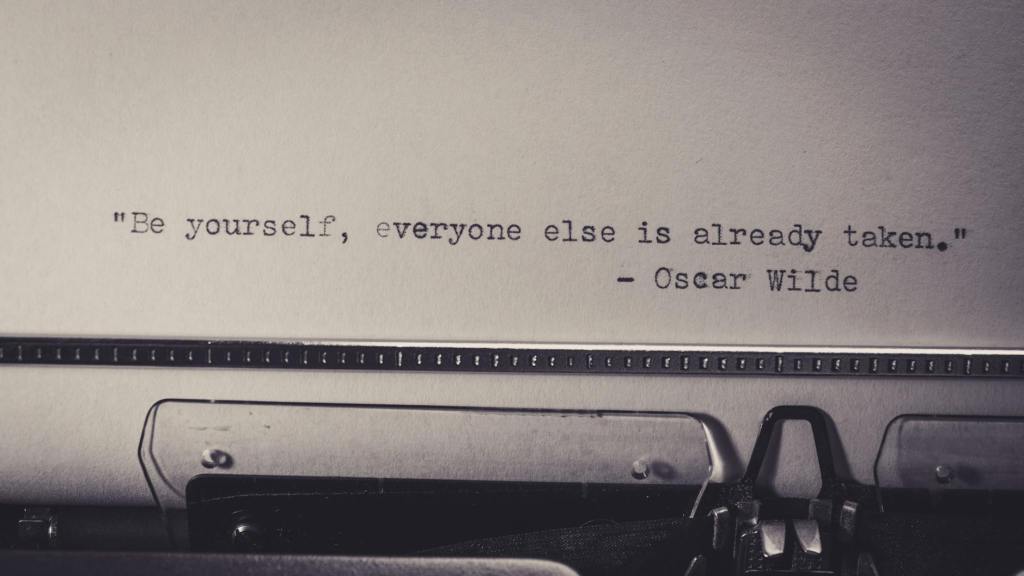
Authenticity has always been like a quiet whisper inside of me, urging me to show up as I truly am. It’s a knowing that runs deep in my chest, one that tells me I should embrace who I am, no matter how much it feels like I might be “too much” for the world around me. There’s this persistent call to be true to myself, to let my vulnerability be seen. But as much as it’s a part of me, there’s also an underlying fear that holds me back. The fear that if I show all the layers of who I am, I’ll overwhelm people. That I’ll stand out in ways that make others uncomfortable. And perhaps, even worse, that I’ll be rejected. This fear of being “too much” has been a quiet shadow following me for most of my life.
As an INFJ, I feel everything deeply—sometimes to an extent that feels overwhelming. It’s hard to explain to others who don’t experience the world the same way I do. As a child, I was deeply attuned to the world around me, but it wasn’t something that worried me at the time. As I grew older, though, I began to realize how different my emotional landscape was from everyone else’s. I started sensing how my depth made others uncomfortable. And instead of embracing it, I learned to hide it, to suppress the parts of myself that felt too intense. I put on a calm, collected mask to blend in. I shut off the parts of myself that I feared would be “too much” for others to handle. But what I’ve come to understand is that this fear doesn’t come from within me; it’s a result of trying to fit into a world that often values surface level interactions and shallow connections. There’s this pressure to be “normal,” to fit into the mold that society sets, and for a long time, I tried to make myself smaller in order to fit in. I thought that if I hid my intuition, my depth, and my emotional sensitivity, I’d be accepted. But the more I tried to suppress myself, the more disconnected I became from who I truly am.
I’ve learned from the words of Lauren Sapala, a writer who understands the complexities of introverted types, that this disconnection happens because the depth of an INFJ’s intuition and emotion can be unsettling for others. “Our intuition is so natural to us, but to others, it seems like magic,” she writes. It’s easy to feel like my intuition is out of place, that it’s something to be hidden. But deep down, I know it’s not something I should suppress. It’s one of the truest parts of me.
The world around me often doesn’t value or understand my kind of depth. There’s a lot of emphasis placed on extroversion, on the “loud” and “obvious” ways of being. The people around me are often caught up in trends, following what’s cool or popular, never questioning the deeper meanings that I crave. They are the ESFJs, ESFPs, and ESTPs. And I get it, it’s easier to go along with what everyone else is doing, to avoid standing out and maybe that is what some people like. But I’ve come to realize that for me, being true to myself, dressing how I feel, expressing my emotions, surrounding myself with the things that speak to my soul, isn’t something to be ashamed of. It’s who I am.
I’ve been learning that it’s okay to be moved by a piece of music or a painting. It’s okay to feel the weight of a sunset or to be deeply affected by a thought, a conversation, or a moment in time. Those things don’t make me “too much.” They are parts of what make me me. As an INFJ, I can’t live on the surface. I need the depth, the beauty, the meaning in the small moments. I have always seen the world through that lens, and I no longer want to hide it.
In my work, I’ve found that showing up authentically has allowed me to connect with others in a way I never could when I was hiding myself. When I embrace my intuition and my emotional depth, I don’t just feel more at ease with who I am, I notice others do too. It’s as if there’s a quiet permission in my presence for them to show up as they are, too. Whether it’s through my work with students or simply being present in the moment, I’ve seen how authenticity can create an environment of acceptance. When I allow myself to be fully me, without apology, it invites others to be fully themselves as well.
I’ve also realized that it’s okay to walk to the beat of my own drum. I don’t need to follow the trends that others seem to embrace. I don’t need to shrink myself into something that feels comfortable for those who only want surface-level interactions. I am learning that I don’t have to fit into a mold I was never meant to be in. I don’t have to apologize for the depth of who I am.
In the end, authenticity isn’t about fitting into some ideal. It’s about being true to myself, no matter how that may look to others. I’m learning to trust that my intuition, my emotional depth, and my introspection are the very things that allow me to understand the world in a way that others don’t. The world doesn’t always understand my quiet depth, but that’s okay. I’m not here to fit in. I’m here to be me. And when I embrace that truth, I create space for others to do the same. Authenticity doesn’t just mean being true to who I am, it also means celebrating the uniqueness of others. By showing up as myself, I invite others to do the same, creating a world where diversity isn’t something to be tolerated, but something to be valued. In a society that often seeks conformity, embracing authenticity allows us to honor the wide spectrum of human experience. It’s through our differences that we become more complete, more connected, and more compassionate. So, when I live authentically, I’m not just allowing myself to be who I am—I’m also making room for the beauty of others’ uniqueness to shine through as well.
In embracing diversity, we create a world that acknowledges and appreciates the many different ways we all experience and interact with life. Authenticity allows us to come together not in spite of our differences, but because of them. It’s in our individuality that we find true connection, and it’s through that connection that we all grow.

 The Dreamer's Pen
Leave a comment