
I’ve been reflecting a lot lately on how different Enneagram types interact in books and films. As an INFJ 4w5, I’ve always been fascinated by the complexities of character dynamics, particularly the tension between characters who are polar opposites but somehow find themselves intertwined. It’s this sort of contrast that adds a deep, almost magnetic layer to a story.
For example, in Wicked, the relationship between Elphaba (INFJ) and Glinda (ESFJ) is the perfect example of two very different personalities clashing, and yet, despite their differences, they form one of the most compelling relationships in literature and theater.
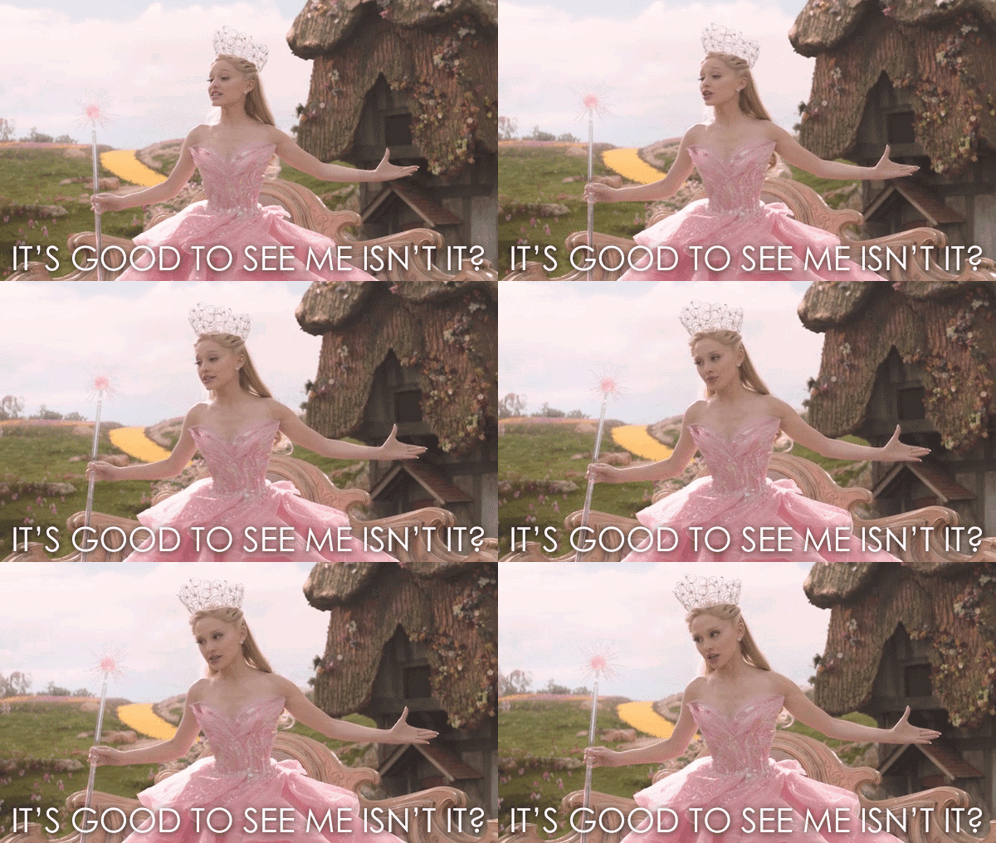
I’ll admit, when I first encountered Wicked, I immediately found Glinda to be incredibly annoying. And I’m not just talking about the way she says “It’s good to see me, isn’t it?”—I’m talking about the way she exudes this perfect little bubble of superficial charm and doesn’t seem to care about anything beyond her own popularity. She’s all about fitting in and maintaining her social standing, and as an INFJ, it’s honestly grating. I found myself silently chanting, “I loathe you,” in true Wicked fashion.
But, of course, that’s the whole point of their dynamic: Elphaba, with her deep, internal world, finds Glinda’s social energy to be both exhausting and incredibly foreign. Glinda is the epitome of the ESFJ. She’s socially adept, charming, and concerned with status and societal expectations. She thrives on connection and approval. For her, it’s all about appearances and fitting in with what’s socially acceptable, even if it means ignoring deeper issues or playing things a little too safe. She lives in a world of social validation, where being liked and admired is everything.
Elphaba, on the other hand, represents the INFJ. She’s deeply introspective, idealistic, and often misunderstood. She’s someone who doesn’t just feel different—she is different, and she knows it. Born with green skin, she faces the harsh judgment of society, but her real isolation comes from her refusal to conform. Elphaba sees the world in its deepest, most intricate layers. She has a moral compass that’s unwavering, even when it leads her down difficult and lonely paths. She doesn’t have the luxury of ignoring the injustices she sees, and she can’t reconcile herself to a world that fails to live up to her ideals.
One of the most striking examples of this conflict is Glinda’s response when Elphaba exposes the Wizard’s corruption. Elphaba’s refusal to accept the lies and injustices around her doesn’t just challenge the status quo, it challenges Glinda’s whole way of living. While Elphaba is willing to stand up for what’s right, no matter the cost, Glinda—who has always adhered to societal norms and expectations—hesitates. She admires Elphaba’s courage, but she doesn’t have the strength to follow in her footsteps.
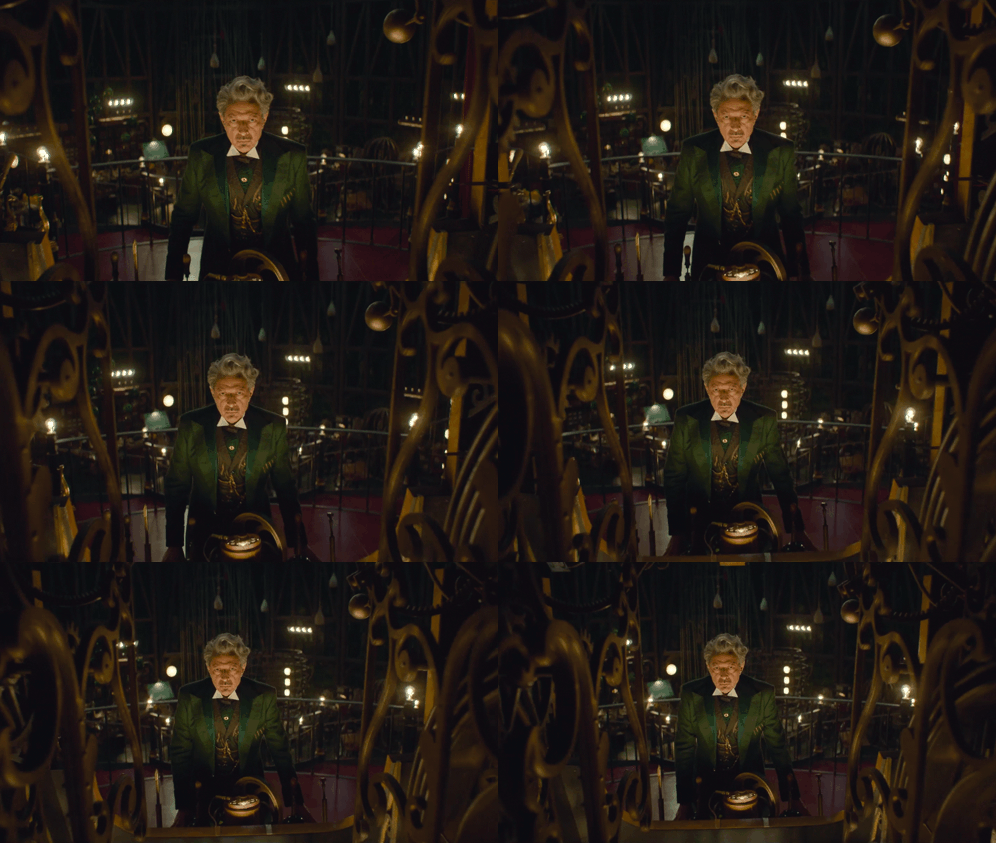
Instead, Glinda chooses the comfort of status and conformity. She allows the world to label Elphaba as “wicked” because, for Glinda, maintaining her place in the social hierarchy is easier than facing uncomfortable truths.

This is where the ESFJ tendency to avoid discomfort, especially when it comes to social harmony, is most evident. ESFJs like Glinda will often choose to go along with the prevailing narrative because challenging it would upset the balance of things. They may avoid difficult conversations or truths to preserve peace, even if it means abandoning their moral compass in the process.
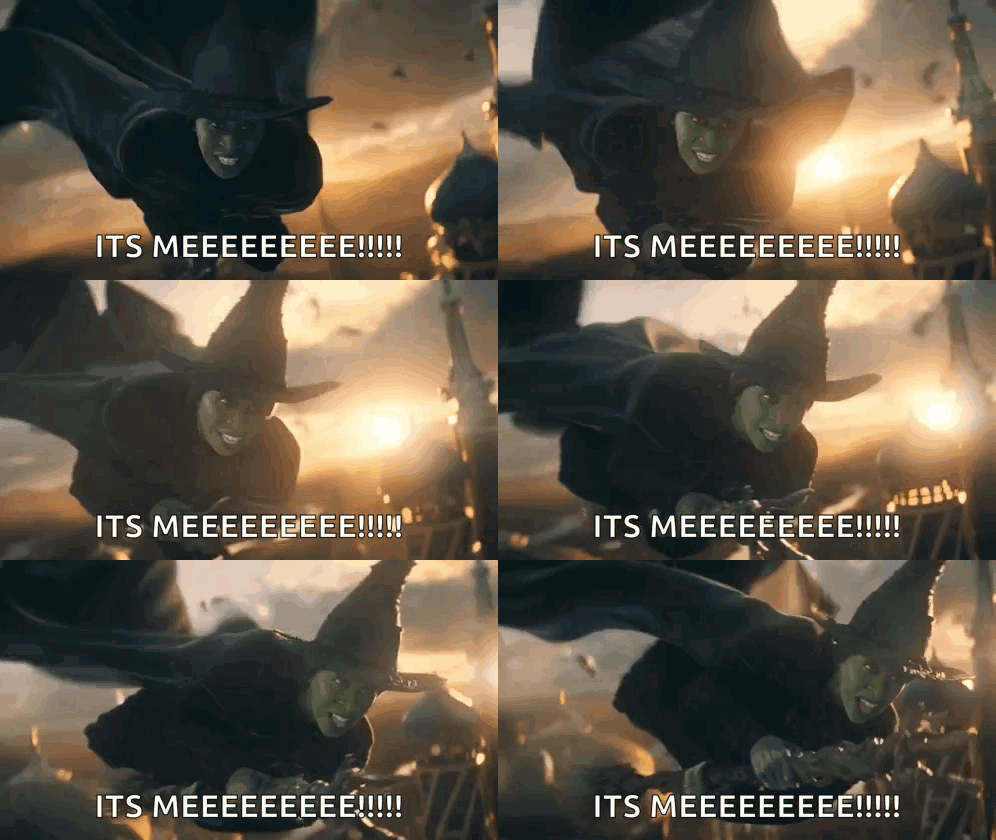
Elphaba, as an INFJ, cannot make that choice. For us, there’s no peace in pretending. There’s no peace in ignoring injustice or hiding behind social facades.
We also see that Elphaba loses Fiyero (ENTP). While Elphaba’s deep emotional complexity and idealistic views on life set her apart, Glinda’s social grace and ability to fit in with others draw Fiyero toward her.
Elphaba’s introspective, sometimes withdrawn nature, which often isolates her from others, contrasts with Glinda’s outward warmth and ability to connect with people effortlessly.
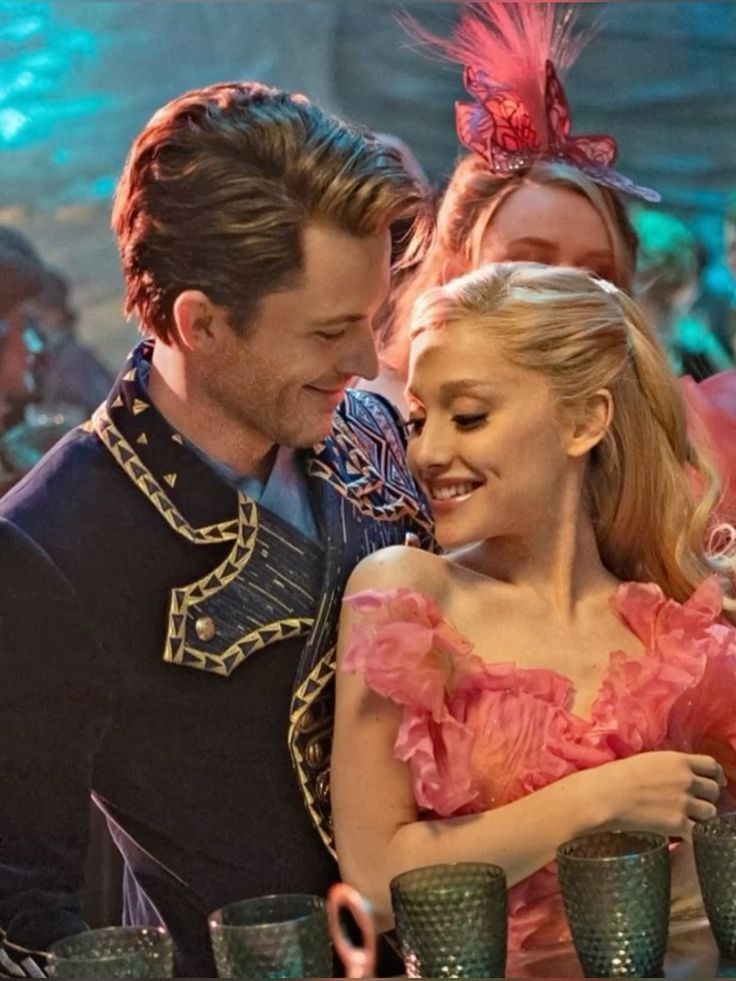
As we see with Elphaba, this disconnect is sometimes what makes the INFJ feel distant or misunderstood, and even though their bonds are often profound, they may lose out to the more naturally charismatic and socially adept ESFJ, like Glinda, who finds a way to fit into the world with a bit more ease.
The relationship between Elphaba and Glinda is a perfect illustration of the INFJ-ESFJ dynamic: two personalities that are drawn to one another, yet constantly at odds. Elphaba’s need for authenticity and her rejection of societal norms puts her in direct conflict with Glinda’s desire for acceptance and external validation. While they both have a great deal to offer each other, the clash between depth and conformity creates a tension that is hard to resolve.
For INFJs, like Elphaba, the world can often feel like a place where we don’t quite fit in. We see things that others can’t or won’t and this can leave us feeling isolated or misunderstood. But when we encounter an ESFJ like Glinda, who thrives on social connection and the approval of others, we can’t help but feel a sense of dissonance. We see the potential for something deeper, but often, we’re left frustrated by their inability to see beyond the surface.

 The Dreamer's Pen
Leave a comment